

30-Second Summary
- If you're buying your first racquet stringer machine, start by identifying your biggest priority: portability, value, or maximum consistency.
- Portable machines are ideal for players who travel, have limited space, or want to string anywhere.
- Crank machines offer proven reliability and strong long-term value for home stringers.
- Electronic machines deliver the highest level of automation and tension consistency, making them popular among serious players and high-volume stringers.
- The best machine isn't necessarily the most expensive,it's the one that helps you produce the same reliable string setup every time you restring.
Choosing the right tennis racquet stringing machine can have a bigger impact on your game than many players realize. While most discussions focus on strings, tension, and racquets, the machine used to install those strings plays an important role in consistency, accuracy, and overall performance.
A slight variation in tension can change ball flight, spin production, comfort, and confidence on court. This is why more players are exploring the benefits of owning their own stringing machine rather than relying solely on shop services. Whether you're a competitive player, coach, frequent string breaker, or simply looking to gain more control over your equipment, understanding the differences between portable, crank, and electronic machines is the first step toward making a smarter long-term investment.
Why More Players Are Buying Their Own Stringing Machines
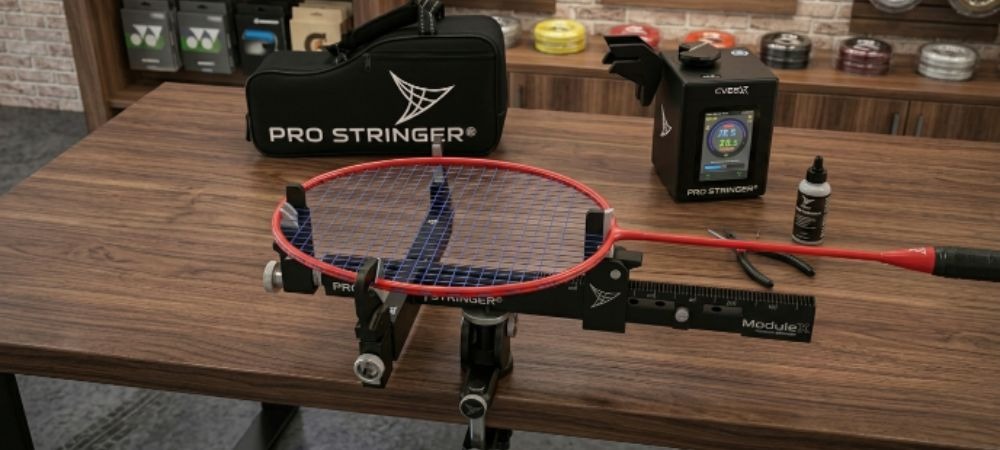
For many tennis players, restringing starts as an occasional expense. You drop your racquet at a local shop, wait a few days, and pick it up when it's ready.
But as players become more serious about their equipment, a common problem begins to emerge: inconsistency.
One string job feels perfect. The next feels slightly tighter. Another launches the ball higher than expected. Even when the requested tension remains the same, the results can vary depending on the stringer, machine calibration, technique, and timing.
This is why more players are investing in their own racquet stringer machine .
Initially, the motivation may be saving money. Over time, however, most players discover an even greater benefit: control.
Owning your own machine allows you to:
- Restring whenever needed
- Maintain consistent setups
- Experiment with strings and tensions
- Eliminate waiting times
- Build confidence in your equipment
The challenge is choosing the right machine.
Today's market is dominated by three primary categories:
- Portable stringing machines
- Crank stringing machines
- Electronic stringing machines
Each offers different advantages, costs, and performance characteristics.
An Overview of Three Main Types of Stringing Machines
Before comparing specific machines, it's important to understand how each category works.
| Machine Type | Tensioning Method | Portability | Typical User |
| Portable | Manual or Portable Electronic | Excellent | Traveling players |
| Crank | Lockout Tension System | Low | Home stringers |
| Electronic | Constant Pull Motorized System | Low to Moderate | Serious players and shops |
The best choice depends on your goals rather than a single "best" machine.
Portable Stringing Machines Explained
Portable machines are designed to prioritize mobility without sacrificing functionality.
Unlike traditional shop machines that remain fixed in one location, portable systems allow players to string racquets virtually anywhere.
This category has become increasingly popular among tournament players, traveling coaches, and competitive juniors.
Advantages of Portable Machines
Maximum Flexibility
The biggest advantage is obvious: portability.
Players can transport the machine between tournaments, training sessions, or even international travel.
Smaller Footprint
Not everyone has space for a large stand-alone machine.
Portable machines require significantly less storage space.
Consistent Setup Anywhere
Competitive players often struggle with varying stringing quality across different locations.
A portable machine allows players to maintain their preferred setup regardless of where they compete.
Potential Limitations
Portable machines are not automatically better than larger machines.
Some portable systems:
- Require more manual involvement
- May take longer to string
- Have fewer automation features
However, recent technological developments have narrowed this gap considerably.
Crank Stringing Machines Explained
Crank machines have been a staple of tennis stringing for decades.
They use a lockout tensioning system where tension is applied until the desired setting is reached, after which the mechanism locks into place.
Many home stringers still prefer crank machines because of their durability and simplicity.
Advantages of Crank Machines
Excellent Value
Crank machines often provide a strong balance between cost and performance.
Proven Reliability
These machines have been trusted for years by clubs, coaches, and home stringers.
Durable Construction
Many crank machines remain operational for decades with proper maintenance.
Faster Learning Curve
The mechanical nature of crank machines makes them relatively straightforward to understand.
Potential Limitations
Lockout Tensioning
Unlike constant-pull electronic systems, lockout systems stop pulling once the target tension is reached.
As the string begins to relax, actual tension can decrease slightly.
More Operator Dependent
Achieving consistent results often depends heavily on technique and experience.
Electronic Stringing Machines Explained
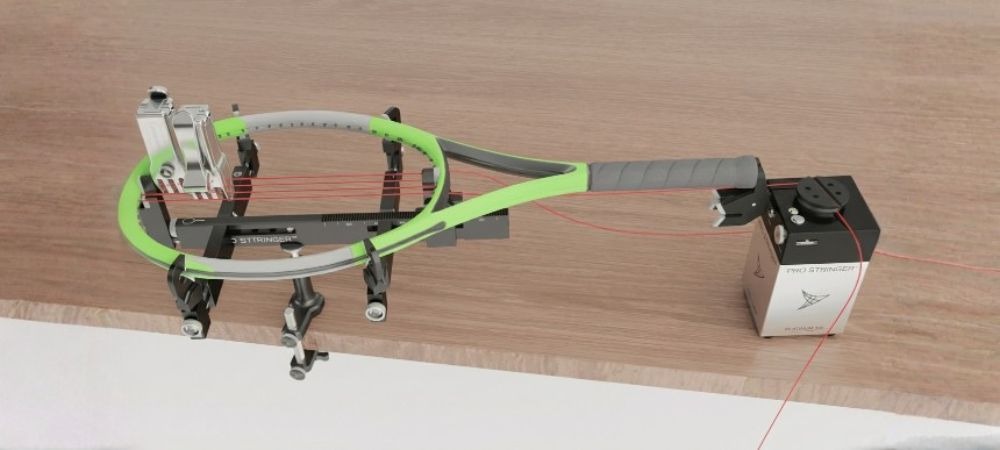
Electronic machines represent the most technologically advanced category.
Instead of relying on manual force or lockout systems, electronic machines use motors and computerized controls to maintain precise tension.
Advantages of Electronic Machines
Constant Pull Tension
This is the biggest advantage.
The machine continuously adjusts during the pull to maintain target tension.
Superior Accuracy
Electronic systems often provide greater precision than manual alternatives.
Reduced Physical Effort
Stringing becomes less physically demanding.
Advanced Features
Many modern machines offer:
- Digital controls
- Memory settings
- Pre-stretch functions
- Knot tension adjustments
- Custom stringing profiles
Potential Limitations
Higher Cost
Electronic machines typically require a larger upfront investment.
Larger Footprint
Many electronic machines are designed as permanent workstations.
Technology Dependence
More electronics generally means more complexity.
FAQs
Most beginners choose either a portable machine or a crank machine depending on their budget and portability requirements.
Generally, yes. Electronic constant-pull machines typically provide greater tension consistency and precision.
Yes. It was specifically designed to provide electronic stringing performance in a portable format for players who travel frequently.
The Pro Stringer CybeX includes advanced features such as WiFi connectivity, touchscreen controls, software updates, and Sweet Spot Optimization functionality.
For players who restring regularly, owning a machine can provide both long-term cost savings and greater consistency in their equipment setup.


